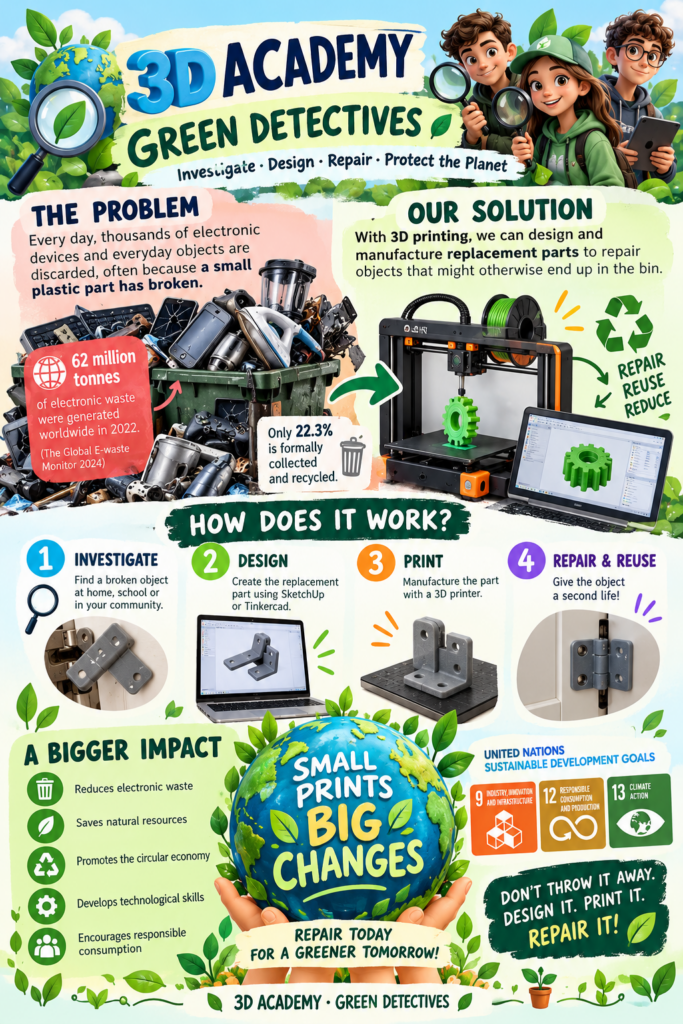
We live in a society where thousands of electronic devices, household appliances, and everyday objects are discarded every day. Mobile phones, computers, printers, small household appliances, and many other devices become waste, often long before reaching the end of their useful life.
One of the most concerning problems is that many of these devices are discarded simply because a small plastic component has broken, such as a gear, hinge, support, button, or casing. Even when the rest of the device works perfectly, the difficulty of finding replacement parts, their high cost, or their lack of availability can lead to the disposal of the entire product.
This situation contributes to the increasing amount of Waste Electrical and Electronic Equipment (WEEE), one of the fastest-growing waste streams worldwide.
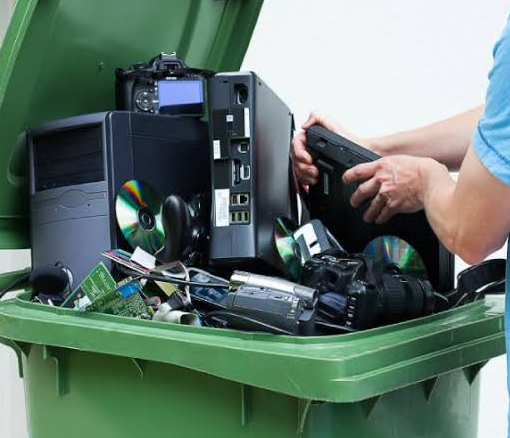
According to The Global E-waste Monitor 2024, approximately 62 million tonnes of electronic waste were generated worldwide in 2022, of which only 22.3% was documented as formally collected and recycled.
Electronic waste represents a serious environmental challenge because it may contain heavy metals, hazardous substances, and materials whose extraction and production require significant amounts of energy and natural resources. Improper waste management can contaminate soil, water, and air.